
Happy July! Since spring, I have uploaded two new drafts: The oldest Greek loanwords in Proto-Uralic, and The synchronization of Iranic and Hellenic loanwords in Proto-Uralic (Response to Holopainen 2019, “Indo-Iranian borrowings in Uralic”).
I have removed about 50 Helleno-Uralic etyma from the working lexicon, in order to speed up the process of publishing my first paper. I plan to revisit these etyma in future research, but they present unique or difficult phonological scenes that can not be regularized at this time.
In the meantime, I have discovered another phonological scene, which has allowed me to propose several new etyma: H ks-, ps- > U *ts’- / *ć-. In addition to the established substitution H z /dz/ > U *ć, it appears that both H ks- and ps- were regularly substituted by the same Uralic phoneme, due to a restriction on initial consonant clusters in Proto-Uralic phonotactics.
Now, let’s check out the latest Helleno-Uralic etyma. Éla!
++++

diáge- ‘to cross, pass’
H διάγω to carry across, cross over; cause to continue, continue; pass (of time)’ (LSJ) > FU *jakka- ‘to go, get to’ (UEW)
Cf. Md. ‘to go, wander’, Old Hu. ‘to let arrive’. The causative semantics of Hungarian iktat- must be attributed to its causative suffix -tat: So this value can not be factored into HFU diáge-, despite its additional attestation as a causative verb.
This etymon was probably originally a travel term associated with crossing a river (cf. HFU póros ‘bridge, ferry, river passage’), as it was used by e.g. Homer and Xenophon to refer to ferry transport.

diakhé- ‘to butcher, cut up, divide, separate’
H διαχέω ‘to cut up a victim into joints, disperse, dissolve, pour different ways, scatter’ (LSJ), ‘to divide, separate / разделять’ (RD) > U *jaka- ‘to divide, separate, share’ (UEW)
Cf. F ‘to apportion, divide’, S ‘to apportion, divide’, Md. ‘to detach, divide, separate; solve’, P ‘to cut, distribute, divide, take apart’, Mn. ‘border of the back of the head and neck’, Sy. ‘to cut up bird, fish, or reindeer for cooking’. Kamassian ‘to crumble’ might also be compared with H ‘to dissolve’, if not rather a secondary semantic development due to its limited distribution.
Samoyedic may best preserve an original primary meaning ‘to cut up (meat)’: In Book 3 of Homer’s Odyssey, the aorist form διέχευαν is used to describe the dividing of a slaughtered cow into its joints for a communal feast.

(é)ksodos ‘military expedition > war’
H ἔξοδος ‘marching out, military expedition’ (LSJ) > U *ćoδ́a ‘war’ (Aikio forthcoming)
The H aphaeresis of related terms is found in e.g. ξόδεμα, ξοδεύω, and ξόδι (GML), although this is not attested for modern Greek έξοδος, where stress has preserved the initial vocalism.
Historiographical evidence for Helleno-Uralic participation in warfare is found in Histories, where Herodotus discusses that the Budini and Geloni joined the Scythians in their defensive war against the Persians.

ksúlon ‘wooden spoon’
H ξύλον ‘piece of wood; spoon (made of fig wood)’ (LSJ) > U *ćulə ~ *śulɜ ‘vessel’ (UEW)
Cf. Es. ‘trough’; P ‘long, round, small wooden trough into which… flour is sifted’, ‘long bowl’; Sy. ‘spoon’, ‘trough-like vessel’.
H ξύλον has been attested with many semantic values which stem from a meaning ‘wood’, including ‘beam, log, piece of wood, post, stake, timber; bench, table; collar, gallows, stocks’, and others. It is clear that ξύλον was a productive term to refer to wooden materials, such as ‘(wooden) spoon’ in the Greater Hippias of Plato. This text also uses the word τορύνη ‘ladle’ (FEG) in the same comparison of a golden versus wooden spoon for soup. The value ‘ladle’ may help to bridge the semantic range of U ‘trough’, ‘bowl’, and ‘spoon’.
From the Classical Greek value ‘ladle, spoon’, it may be inferred that this meaning already existed in the Gelonian dialect. In this sense, the Samoyedic branch would best reflect the original semantics, with a secondary development in Finno-Permic to ‘trough’. However, it may instead be that ‘trough’ had already developed in Gelonian Greek, given the wide array of meanings that can be assigned to H ξύλον; and that Enets likewise attests ‘trough-like vessel’ – although this value is found neither in Selkup nor Nganasan, which do not form an exclusive taxonomic grouping.

maîa ‘midwife > beaver’
H μαῖα ‘midwife’ (LSJ, FEE) > FP *maja ‘beaver’ (UEW)
The testes of beavers were used as a medical treatment for conditions of the womb from as early as the time of Herodotus, who described their usage by the Geloni and Budini for this purpose. Later Greco-Roman authors like Dioscorides and Pliny further discussed the usage of beaver testes as an emmenagogue and expellant of the embryo, fetus, or afterbirth (Rosa 2018: 8-11). Although these texts do not explicitly refer to childbirth, I reason that this medical treatment could have also been applied for the inducement or ease of labor. The naming of the beaver as a “midwife” would have been descriptive of its relevance in the aid of delivery, much as the squirrel (ourǣ́) was described by its tail, or the ermine (phoíta) by its frenzied dance.

ókhtha ~ ókhthǣ ~ ókhthos ‘riverbank > land route along a river’
H ὄχθα ‘river-bank, sea-cliff’ (ES) ~ ὄχθη ‘bank of a river’ (LSJ), ‘raised banks of a river’ (ML) ~ ὄχθος ‘bank, hill’ (LSJ)
> U *uktə ~ *ukti ‘passage, way’ (Aikio forthcoming) ~ *utka ‘track, trail’ (UEW)
Cf. F (*uktV- >) ‘component of hydronyms connected with narrow land passages between water routes’*; Kh. (*ɔ̄ɣǝt >) ‘isthmus between two lakes or rivers over which boats are hauled’; Mn. (*ī̮kǝt ~ *ī̮ktǝ >) ‘anabranch, strait between two lakes’; Hu. út ‘road, way’; Sy. (*utǝ̑ ~ *ut >) ‘road, way’, ‘track’.
The semantics of U *ukti are very similar to that of *mvtka ‘way’, which could also be reconstructed with an original meaning ‘detour’ (Aikio 2015b: 14). Both terms in their reflexes refer to not only a general land path, but also an isthmus or similar land formation used as a portage, as well as a side channel or anabranch. It could be reasoned that U *ukti was likewise a detour or bypass, wherever a river could have been more easily traveled along the banks instead of its primary nautical course. In both *ukti and *mvtka, the semantics ‘anabranch, strait’ are restricted to Ob Ugric: So this may have been a secondary development from ‘detour’ for terms that originally referred to land routes, where the main course of a river in the Ugric sprachbund was not as navigable as its anabranch.
*Paraphrased from the original text
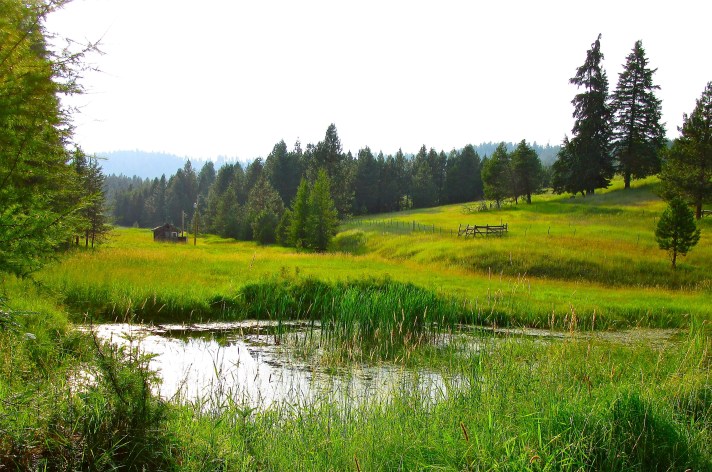
orgás ‘fertile meadow in a forested river valley’
H ὀργάς ‘clearing, uninhabited area of forests, any well-watered, fertile spot of land, meadow-land, partially wooded, with or without cultivated fields’ (LSJ), ‘a moist, well-watered, lushly fertile area, marshland… esp. floodplain, pasture’ (GP), ‘bushy and mountainous place’ (Hsch.)
> FU *orka(w) ~ *orko ‘riverbed, valley’ (Aikio forthcoming) ~ *orkɜ ‘depression, flat valley, river valley’ (UEW)
Cf. S (*oarkō >) ‘valley with pine and birch forest’; F (*orko >) ‘small, damp, forested valley; gully, ravine’, ‘lowland; dense forest, thicket’, ‘valley’, ‘depression in terrain’; P (*u̇r >) ‘riverbed’; Mn. (*ī̮ɣrak >) ‘steep riverbank’ (Aikio forthcoming). Note here also the previously unetymologized Ma. orgáž / оргаж ‘brushwood, thicket’ (MED) – this may however be a later loan, given its final sibilance.
The semantics of HFU orgás require an interesting confluence of natural features: A tract of land where the forest, water, and mountains were all in its immediate vicinity. It is unclear whether or not this land would have been used for agriculture (i.e. “with or without cultivated fields”), although Herodotus does describe the Gelonian Greeks as agriculturalists. It is also unclear how this term might be related to e.g. HFU áros ‘flood meadow’ and áza ‘dry land’, which can each likewise refer to riparian meadows in their Hellenic and/or Uralic semantic reflexes. It is assumed that there must have been a topographical contrast of these etyma in the Gelonian dialect which required multiple terms: At the very least, orgás is unique for its reference to local woods and mountains.
H -ás / -άς is not well-documented in HU etyma (although FU non-sibilance is expected here); and Aikio’s reconstruction of a secondary *-o (vs. *-aw) here is without explanation: FU *orka(w) may be equally suitable. One might posit that S *oarkō was borrowed from F *orko, for which S *oa- and *-ō were regular substitutions.

psalé- ‘to cut’
H *ψαλέω ~ ψαλίζω ‘to cut / κόβω’ (GML) > U *ćälä- ‘to cut’ (Aikio forthcoming) ~ *ćälä- ‘to cut, slice’ (UEW)
Cf. H psalís / ψαλίς ‘razor, scissors’ (LSJ). As none of the Uralic reflexes refer to scissors, this was probably not an available technology during Helleno-Uralic contact: Rather, a singular razor would have been the tool relevant to this verb. H ψαλίς appears to have been derived from an unattested *ψάλος, *ψάλα, or *ψαλή: Cf. πυξίς ‘box made of boxwood’ (LSJ, FB) < πύξος ‘boxwood’, γλωσσίς ‘mouthpiece of a wind instrument’ < γλῶσσα ‘tongue’, φωνίς ‘quiet voice’ (GML) < φωνή ‘sound of the voice’. An unattested verb *psaléō / *ψαλέω may have therefore been the source of U *ćälä- (cf. e.g. φωνέω ‘to sound, speak’).

psóros ~ psúros ‘?weever > pike’
H ψόρος ‘an unknown fish’ (LSJ) ~ ψύρος > FU (P+Ug.) *ćurə ~ *śurɜ ‘pike’ (UEW)
The psoros fish is discussed in Book 7 of the Deipnosophistae by Athenaeus of Naucratis. This ambiguous fish is summarized among the “Melanouros”, or black-tailed fish (see Olson 2006: 469): “Speusippus… claims that what is referred as psuros resembles the melanouros. Numenius refers to the fish as a psoros… or saupes or a shore-hugging weever-fish.”
Similarities between the pike and weever include black-striped tails, long bodies, and being ambush predators. However, their faces are of different shapes; and the weever is unique for its venomous spines on its first dorsal fin. Also, the term melanouros / μελάνουρος (LSJ) referred to the saddled seabream (as does the modern Greek form μελανούρι), which bears little resemblance to either the pike or weever. Still, the approximation of the weever to the pike during Helleno-Uralic contact could have been due to a limited distribution of the pike in Greece, where today it is known as the “river barracuda” / λούτσος των ποταμών or “freshwater barracuda” / λούτσος του γλυκού νερού – with λούτσος (GML) being a loan from Venetian.
Interestingly, HFU psóros is restricted to Permic and Ob-Ugric, much as HFU skáphǣ ‘boat’. It is unclear if these terms could have been synchronous in some type of Permic-Ugric sprachbund (see the reconstructional discussion of HFU psŷksis).

psŷksis ‘cooling weather > autumn’
H ψῦξις ‘a chilling, cooling (from e.g. snow), becoming cold’ (LSJ) > FU *ćükći ~ *sükśe ‘autumn’ (UEW)
Cf. H psŷkhos / ψῦχος ‘cold, cold weather, coolness, frost, winter-time’ (LSJ) and ψύχω ‘to blow, grow cool or dry (of e.g. wind), refresh’ (LSJ). Hesychius defines ψῦξις as “πνοή”, which generally means ‘breath, breeze’ (LSJ), but in his own words as “ἀνάψυξις” ‘cooling, drying up, relief, respite’ (LSJ), which is then defined as “ἀνάπαυσις” ‘repose, rest (from a thing); cadence of a period’ (LSJ), for which he provides no entry.
It seems likely that HFU psŷksis was simply the Gelonian dialectal term for ‘autumn’: Much as the closely related term ψῦχος described cold weather, frost, and winter, ψῦξις could describe becoming cold from the snow. A similar word formation and semantic development of a term for a season can be seen in Η ánoiksis / ἄνοιξις ‘opening’ (LSJ) > Greek ániksi / άνοιξη ‘springtime’, where an action noun evolved to mean a period of time. Therefore, autumn in the Helleno-Uralic zone was noted by the seasonal arrival of cold (and dry?) air and precipitation. Although modern climate data can not necessarily be informative of ancient weather, cities located along the Volga-Kama (e.g. Kazan) all show a sudden drop in temperature, and increase in snowy days, in the month of October. The early arrival of cold weather and snow might have allowed for a semantic association with ‘autumn’ rather than ‘winter’ for the Gelonians, who originated from far to the southwest of the Ananyino horizon.
FU *ćükći ~ *sükśe is notoriously difficult to reconstruct. The common perspective on the initial consonantism seems to be that the branch reflexes which would reflect an original palatal FU *ć/ś- (S *čëkčë, Md. *śokś, Kh. *söɣəs) could be explained as a subsequent assimilation to the secondary sibilant, whereas P *siźïl, Mn. *tüks, and Hu. ősz would reflect an original plain sibilant *s-. There is, however, no preconceived phylogenetic or areal grouping that could explain how only the Samic, Mordvinic, and Khanty branches reflect this innovation: So these assimilations must be treated as separate events in order for an original FU *s- to be supported. From my view, the Permic, Mansi, and Hungarian branches could be a more likely areal grouping for a secondary dissimilation from an original FU *ćükći, since the core zones of these three branches were previously neighbors (see Saarikivi 2022: Map 2.8). Furthermore, P *siźïl is not regular in its initial vocalism, which should rather be **ú than *i here. If the Permic form were rather a later loan from e.g. Finnic (F *süksü ~ *sügüs > Fi. syksy ~ syys, Es. sügis), then only the Mansi and Hungarian reflexes would require an original *s-, which would be easier to explain as an innovation in the western Ugric sprachbund, rather than to posit a shared innovation between Samic and Khanty.
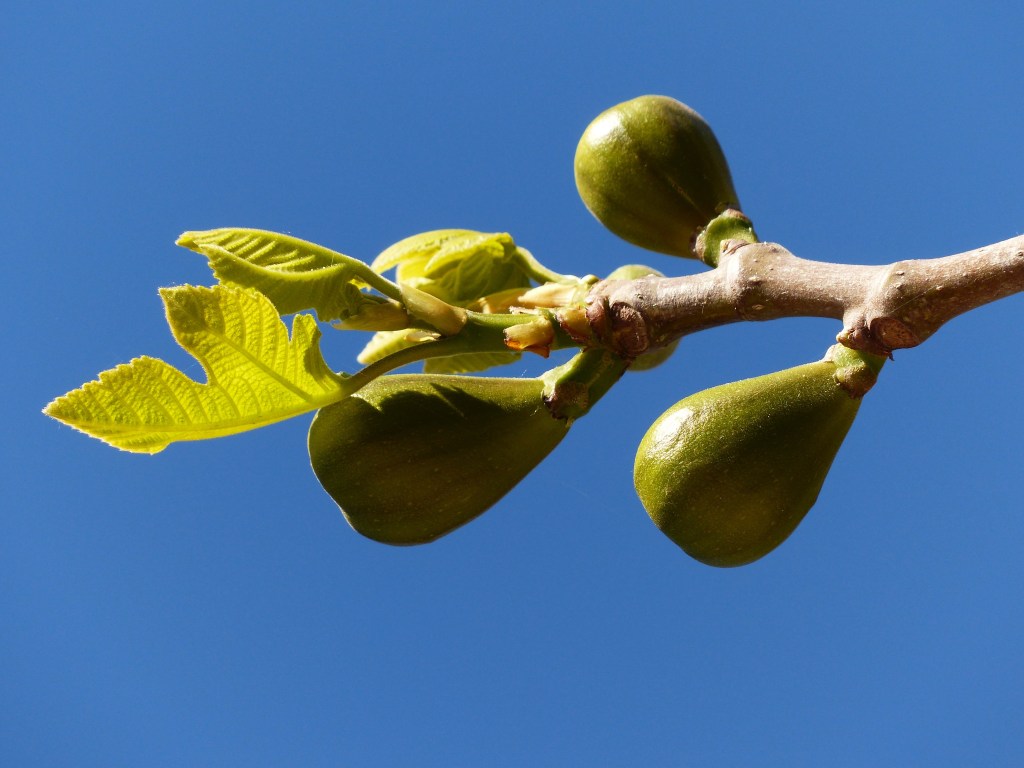
tsŷkon ‘swelling, wart’
H σῦκον (< *tyuk-) ‘fig; swelling, wart’ (FEE) > FV *ćVklä (Aikio forthcoming) ~ *ćüklä ‘wart’ (UEW)
The additional semantics of S ‘swelling’, F ‘spot’, and Ma. ‘pimple’ allow for the consideration of a secondary meaning ‘swelling’ beyond the primary meaning ‘wart’.
Perhaps FV *-lä here could be an obscure Uralic suffix: Cf. FV *juma (UEW) ~ *jumala, U *ńoma (UEW) ~ *ńomala. There is insufficient evidence for U *-kl- (Aikio 2022: 9): So this cluster might have originated from an earlier FV *ćükə-lä. The purpose of this denominal nominalizer is unclear.
++++





 Finngreek